
Introduction: Understanding the Rising Cost of Auto Insurance
Auto insurance rates across the United States have climbed steadily over recent years, driven by inflationary pressures, higher replacement part costs, sophisticated automotive sensor technology, and an uptick in severe weather claims. For many American households, monthly or semi-annual insurance premiums now represent one of the largest single transportation expenses, trailing only vehicle financing payments. However, unlike fixed loan amortization schedules, car insurance is a dynamic, floating expense. Insurance carriers recalculate policy risk profiles on a routine basis, relying on complex actuarial algorithms that weigh your driving history, location, vehicle type, and financial profile.
Because car insurance pricing is fluid, consumers do not have to accept premium increases passively. Every rating factor assessed by an underwriter presents a potential opportunity for rate reduction. Insurers frequently adjust pricing algorithms, discount structures, and risk thresholds to stay competitive. While state insurance commissioners regulate maximum rate caps, carriers retain significant discretion in discounting and risk segmentation.
Navigating the auto insurance landscape effectively requires looking beyond the superficial “save 15 minutes” advertising taglines. Substantial, durable savings come from understanding how policy mechanics work, how deductibles interact with comprehensive and collision payouts, and how your daily habits influence risk metrics. Taking time to review and recalibrate your coverage at renewal periods can uncover hundreds, and sometimes thousands, of dollars in annual savings.
Whether you are insuring a new vehicle, adding a teenage driver, or evaluating an existing policy that has quietly crept up in price over multiple renewals, structured adjustments produce immediate results. The following twelve strategies break down policy adjustments, discount programs, behavioral metrics, and strategic comparison methods tailored specifically to the U.S. insurance market.
1. Optimize Your Policy Structure: Deductibles, Valuations, and Coverage Tiers
The foundation of any auto insurance policy rests on its core coverage elements: liability (bodily injury and property damage), comprehensive, and collision. Tweaking these variables directly recalibrates the level of financial risk transferred to the underwriter, resulting in immediate rate adjustments.
Increase Your Out-of-Pocket Deductibles: One of the fastest ways to lower your premiums is by raising your collision and comprehensive deductibles. Moving a deductible from $250 or $500 up to $1,000 or $1,500 can decrease your physical damage premium by 15% to 30%. Because insurance is designed primarily to protect against catastrophic losses rather than minor cosmetic repairs, absorbing small incidents yourself significantly reduces policy overhead. Ensure you hold the deductible amount in an accessible emergency fund before making this adjustment.
Drop Physical Damage Coverage on Aging Vehicles: If your car is more than 10 years old or its market value has dropped significantly, maintaining full collision and comprehensive coverage may no longer be financially sensible. An established rule of thumb is that if the annual cost of comprehensive and collision coverage exceeds 10% of the vehicle’s actual cash value (ACV), consider switching to liability-only. In the event of a total loss, the carrier will only pay out the ACV minus your deductible, which can render annual premium payments disproportionate to the potential claim return.
Refine Your Annual Mileage Rating: Premiums factor in your exposure to road hazards. Insurers classify vehicles into commute tiers, pleasure use, or business use, each associated with annual mileage estimates (e.g., 7,500, 10,000, 12,000, or 15,000+ miles). If you transitioned to a remote or hybrid work schedule, shortened your daily commute, or use public transit, contact your insurer to reclassify your vehicle as “pleasure use” or adjust your verified odometer projection downwards. Lower road time directly correlates with reduced claim probability.
2. Maximize Policy Bundles, Household Synergies, and Group Affiliations
Insurance companies prize customer retention and customer lifetime value. Carriers offer steep pricing incentives to policyholders who consolidate multiple lines of coverage or qualify through established professional associations and institutional partnerships.
Consolidate Home, Renters, and Auto Policies: Multi-line bundling is one of the most lucrative discounts available in the U.S. market. Purchasing your auto insurance from the same carrier that underwrites your homeowners, condominium, or renters insurance can yield discounts ranging from 5% to 25% across both policies. Even if the auto rate alone seems slightly higher than an unbundled alternative, the total cross-policy discount frequently makes bundling the most economical choice.
Leverage Multi-Car and Multi-Driver Profiles: If your household owns more than one vehicle, insuring them under a single policy invariably yields a multi-vehicle discount of 10% to 20%. Furthermore, policyholders should assign primary drivers accurately to specific vehicles. For instance, pairing an experienced driver with clean records to the higher-value car and an occasional young driver to the oldest vehicle minimizes risk weighting on the primary premium.
Tap Into Employer, Alumni, and Affinity Partnerships: Many national and regional insurers offer affinity discounts based on membership in professional groups, alum associations, credit unions, trade unions, or corporate employer perk plans. Similarly, active military members, veterans, and their immediate families often have access to specialized carriers or dedicated military discounts. Review your affiliated organizations to verify whether preferred pricing arrangements exist with mainstream underwriters.
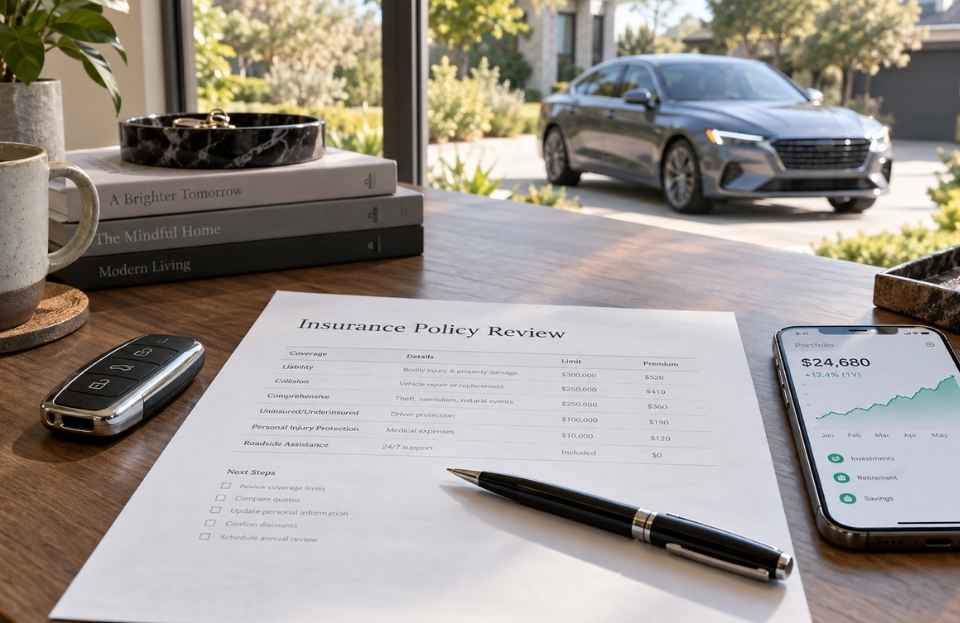
3. Utilize Behavioral Metrics: Telematics, Credit Scores, and Defensive Driving
Underwriting has shifted heavily toward data-driven, individual behavioral evaluation. Rather than relying solely on demographic cohorts, modern insurance models increasingly evaluate verified driving performance, financial management history, and voluntary driver education.
Participate in Telematics (Usage-Based Insurance): Most major U.S. carriers now offer telematics programs that track driving behavior through a smartphone app or a plug-in OBD-II telematics device. These programs monitor variables such as hard braking, rapid acceleration, late-night driving, phone handling, and total speed variance. Drivers who consistently exhibit calm driving habits can earn permanent policy discounts between 10% and 40%. Verify upfront whether the carrier uses a discount-only model or reserves the right to increase rates for aggressive driving events.
Strengthen Your Credit-Based Insurance Score: In the vast majority of U.S. states (with exceptions including California, Hawaii, Massachusetts, and Michigan, where the practice is restricted or banned by state law), insurers use credit-based insurance scores to predict claim likelihood. Actuarial data shows a strong correlation between credit stability and lower claim frequency. Maintaining on-time bill payments, keeping credit utilization below 30%, and correcting credit report discrepancies can steadily elevate your score, directly triggering lower renewal rates.
Complete a State-Approved Defensive Driving Course: Drivers who voluntarily complete an accredited defensive driving or accident prevention course frequently earn a mandatory or voluntary rate discount of 5% to 10%, typically valid for three years. This option is especially advantageous for senior drivers (often 50 or 55+) and youthful operators. Confirm with your insurer which certified online or classroom providers meet their qualifying standards.
4. Vehicle Selection, Payment Mechanics, and Strategic Market Comparison
Your vehicle’s physical profile, the technical configuration of your payments, and how you manage policy renewals round out the key determinants of total auto expenditure.
Account for Insurance Costs Prior to Purchasing a Car: Insurance pricing varies widely by vehicle make, model, trim, and safety score. Cars equipped with advanced driver assistance systems (ADAS) reduce crash probabilities, but high-cost replacement components—such as bumper-mounted radar units and specialized headlamps—can inflate collision premiums. Vehicles with high theft rates, sports tuning, or expensive battery packs also carry higher baseline premiums. Prior to purchasing or leasing, obtain quote estimates on short-listed VINs from your current insurer.
Take Advantage of Billing and Administrative Perks: Transactional logistics carry subtle fee structures and discounts. Enrolling in automatic electronic funds transfer (EFT) from a checking account, opting for paperless billing, and paying your annual or semi-annual premium in a single upfront lump sum eliminates monthly processing fees and earns billing-tier discounts. Avoiding policy lapses is equally critical: maintaining continuous insurance coverage without gaps prevents carriers from placing you in high-risk non-standard insurance pools.
Conduct Independent Comparison Shopping Every 12 to 24 Months: Loyalty to a single insurance carrier rarely guarantees the lowest rate over time. Due to a phenomenon known as “price optimization,” insurers may incrementally adjust premiums upward on policyholders who demonstrate low shopping activity. Obtain quotes from at least three competitors at each renewal window, including both direct-to-consumer national insurers and independent insurance brokers who represent regional mutual companies. Ensure all quotes compare identical liability limits, endorsements, and deductible amounts.
End of the Full Article: Taking Charge of Your Auto Insurance Strategy
Lowering your car insurance premium does not mean stripping away the financial protection necessary to shield your personal assets. A truly optimized policy balances cost efficiency with sufficient legal and financial coverage. Cheap insurance ceases to be a bargain if an unexpected at-fault collision results in personal exposure exceeding standard state-mandated minimum liability limits. The objective is to eliminate unnecessary surcharges, align your policy parameters with your actual driving patterns, and systematically claim every legitimate discount available.
Achieving sustained savings requires an active, disciplined approach. Set a calendar reminder 45 days prior to your semi-annual or annual renewal date. Use this window to review your declarations page, check whether your commute distance has shifted, verify your credit score progression, and assess whether depreciating vehicle value warrants deductible changes or dropping physical damage coverage. Inquire explicitly with your agent or representative about unapplied discounts, including low-mileage allowances, green vehicle credits, or professional associations.
By treating car insurance as an active portfolio expense rather than a passive utility bill, you retain agency over what you pay. Even adopting two or three of the twelve techniques discussed here can compound into hundreds of dollars retained annually, putting you in complete control of your automotive budget.
Frequently Asked Questions (FAQ)
1. How often should I comparison shop for car insurance?
It is recommended to compare auto insurance rates at least once every 12 to 24 months, or immediately following significant life changes such as moving to a new ZIP code, buying a home, getting married, changing jobs, or purchasing a vehicle. Shopping 30 to 45 days ahead of your existing policy’s expiration date allows you to secure quotes and take advantage of “advance purchase” or early renewal discounts without risking a lapse in coverage.
2. Will filing a small claim always make my rates go up?
Not necessarily, but it frequently does. Comprehensive claims (such as windshield repairs, hail damage, or animal collisions) typically affect rates far less than at-fault collision claims. However, if your repair estimate is close to your deductible—for instance, an $800 repair with a $500 deductible—paying out of pocket is often more cost-effective over time. A claim record can trigger surcharges that raise your premiums for three to five years, wiping out the initial $300 insurance payout.
3. Does checking new insurance quotes hurt my credit score?
No. When an insurance company or broker checks your credit profile during the quoting process, it is recorded as a “soft inquiry” (soft pull). Soft inquiries do not impact your credit score, nor are they visible to other lenders. You can obtain multiple quotes from different carriers without damaging your credit standing.
4. What is the difference between collision and comprehensive coverage?
Collision coverage pays for physical damage to your vehicle resulting from an impact with another car or stationary object (such as a tree, guardrail, or pothole), or from a vehicle rollover, regardless of fault. Comprehensive coverage handles damage caused by incidents outside of your direct driving control, including vehicle theft, vandalism, fire, natural disasters, falling objects, and collisions with animals.
5. Why did my premium increase if I had no accidents or traffic tickets?
Insurers frequently implement statewide rate adjustments approved by state insurance regulators. These rate revisions reflect overall macroeconomic conditions in your geographic area, including elevated regional repair labor rates, rising medical expenses, increased local accident and theft frequencies, or severe weather losses across the carrier’s broader risk pool.